

Best Time to Visit Cappadocia: What Locals Recommend
Most travel blogs lump April through October together as "good months" for Cappadocia, which is a bit like saying any temperature between freezing and scorching is comfortable. The real sweet spot is narrower: April to May and September to October deliver the best combination of mild weather (15-25°C), reliable balloon flights, and valleys that look alive with color. Outside those windows, you're trading something, whether it's comfort, flight odds, or your budget.
But "best" shifts depending on what you're after. Travelers chasing snow-dusted fairy chimneys and affordable cave hotels will love January. Photographers obsessed with golden hour over Rose Valley should target early October. Budget-conscious adventurers can find real savings in November and March without sacrificing too much.
This guide breaks down Cappadocia's weather month by month, covers balloon flight cancellation rates by season (a topic almost nobody addresses in detail), and maps out when prices drop lowest across accommodation and tours.
What Does Cappadocia Weather Look Like Month by Month?
Cappadocia's climate swings from below-freezing winters with snow to dry summers above 30°C, making the month you choose the single biggest factor in your trip experience.
The region sits on a high plateau at roughly 1,000 meters elevation, which amplifies seasonal extremes. Spring mornings can still feel crisp at 5°C in April even though afternoons warm to a pleasant 20°C. By July, midday heat makes hiking through Devrent Valley or Love Valley genuinely uncomfortable, with temperatures regularly clearing 32°C and almost no shade along the trails. Autumn resets the clock: September averages 27°C during the day, dropping to a refreshing 8°C at night.
Winter is Cappadocia's most dramatic and most divisive season. Snow blankets the fairy chimneys from December through February, creating scenes that look almost unreal. The trade-off is significant, though: sub-zero overnight lows, fewer operating restaurants in Göreme, and balloon cancellation rates that climb sharply.
Here's the full picture, according to Hot Air Balloon Cappadocia's seasonal data and regional tourism records:
| Month | Avg High °C | Avg Low °C | Rainfall (mm) | Crowd Level | Balloon Flight Likelihood |
|---|---|---|---|---|---|
| January | 8 | -2 | 40 | Low | ~40-50% of mornings |
| February | 13 | -2 | 33 | Low | ~40-50% of mornings |
| March | 15 | 2 | 39 | Low-Medium | ~70-80% of mornings |
| April | 20 | 5 | 53 | Medium | ~80-90% of mornings |
| May | 25 | 10 | 53 | Medium-High | ~85-90% of mornings |
| June | 28 | 13 | 34 | High | ~90%+ of mornings |
| July | 32+ | 16 | ~10 | High | ~90%+ of mornings |
| August | 32+ | 16 | ~10 | High | ~90%+ of mornings |
| September | 27 | 8 | ~10 | Medium-High | ~85-90% of mornings |
| October | 21 | 4 | 11 | Medium | ~80-85% of mornings |
| November | 14 | 0 | ~20 | Low | ~60-70% of mornings |
| December | 8 | -3 | ~40 | Low | ~40-50% of mornings |
A few patterns jump out from this table. April and May get the most rainfall on paper (around 53 mm each), yet that moisture is what turns the valleys green and fills them with wildflowers. It typically falls in short bursts rather than all-day downpours, so it rarely ruins a full day of sightseeing. September and October, by contrast, are bone-dry and bathed in warm, low-angle light that photographers love.
The summer months (June through August) guarantee balloon flights and blue skies, but the crowds and heat carry real downsides that the next section addresses directly.
Why Do Locals Recommend Spring and Autumn Over Summer?
Local guides in Göreme and Uçhisar consistently steer travelers toward April, May, September, and October because summer heat above 30°C, peak crowds, and inflated prices make July and August the least rewarding months for most visitors.

Here's a take that cuts against most travel advice: July and August are the months local guides would skip if planning their own trip. Temperatures regularly hit 35-40°C in midsummer, and very few cave hotels or valley trails offer air conditioning or shade. According to The Turquoise Collection's climate guide, summer in Cappadocia is described as "heavy going" for outdoor activities. Accommodation and tour prices jump 20-50% above shoulder-season rates, and popular spots like Göreme Open Air Museum feel packed by mid-morning.
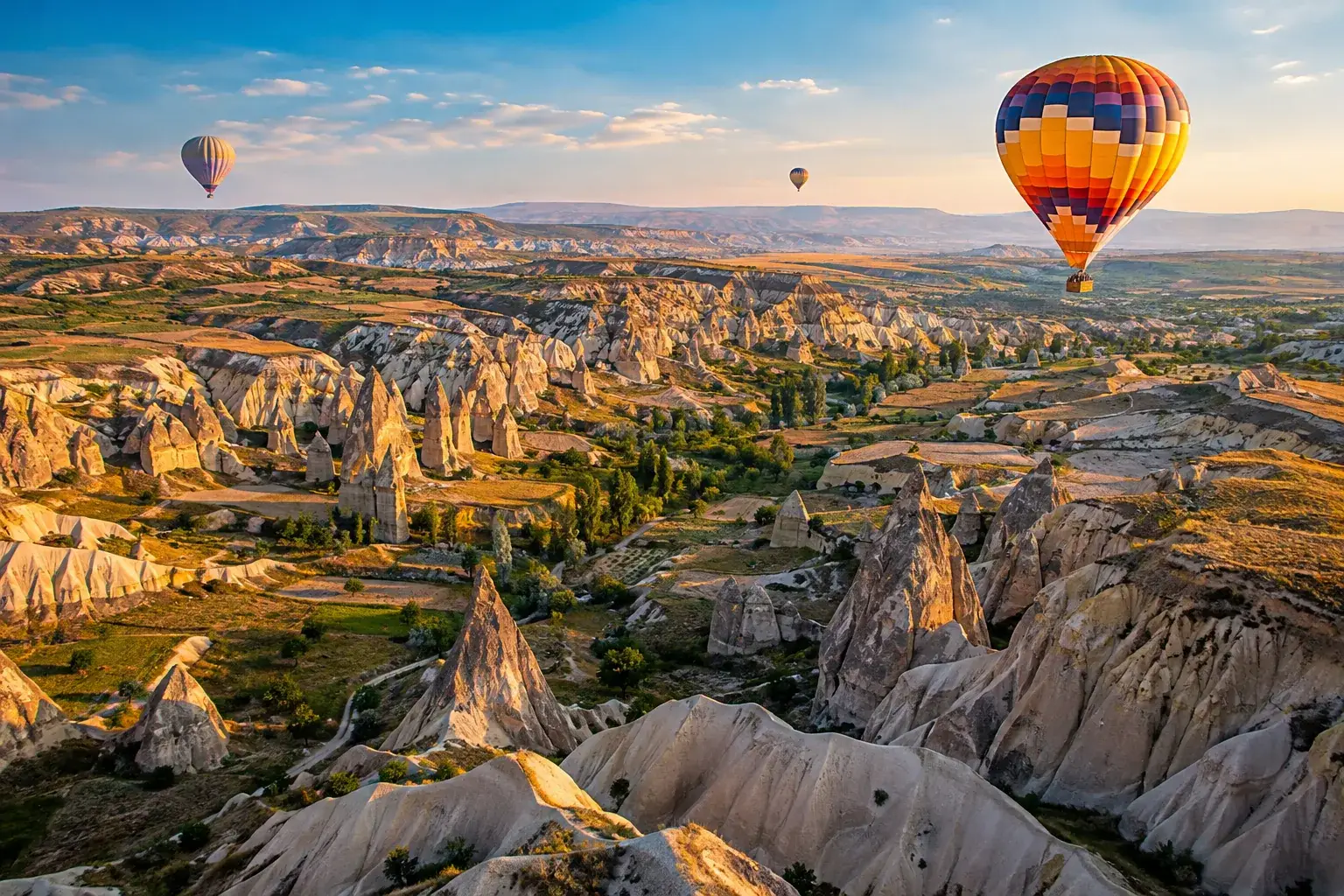
Spring transforms the region. Wildflowers carpet Love Valley and Rose Valley through April and May, hiking temperatures hover between 10-22°C, and balloon flights launch on roughly 85-90% of mornings thanks to stable wind patterns. Weekday visits in early-to-mid May still feel spacious compared to any day in July.
Autumn brings its own magic. The grape harvest is underway across Cappadocia's small vineyards, the light turns golden and low (perfect for that bird's-eye balloon photo), and the tourist wave from August recedes quickly. By mid-October, you can hike Ihlara Valley or explore Cappadocia's underground cities without competing for space on narrow paths.
The true shoulder months are what almost nobody talks about. March is unpredictable (you might get 15°C sunshine or a late snowfall) but tourist numbers are minimal. Late October and November offer cooling temperatures around 14°C during the day, significantly lower prices, and enough balloon flight reliability to make the trip worthwhile. These windows reward flexible travelers who don't need guarantees.
How Often Are Balloon Flights Cancelled by Season?
Balloon flight cancellations in Cappadocia range from under 10% of mornings in summer to 40-60% in winter, governed by Turkish Civil Aviation Authority wind and visibility rules.
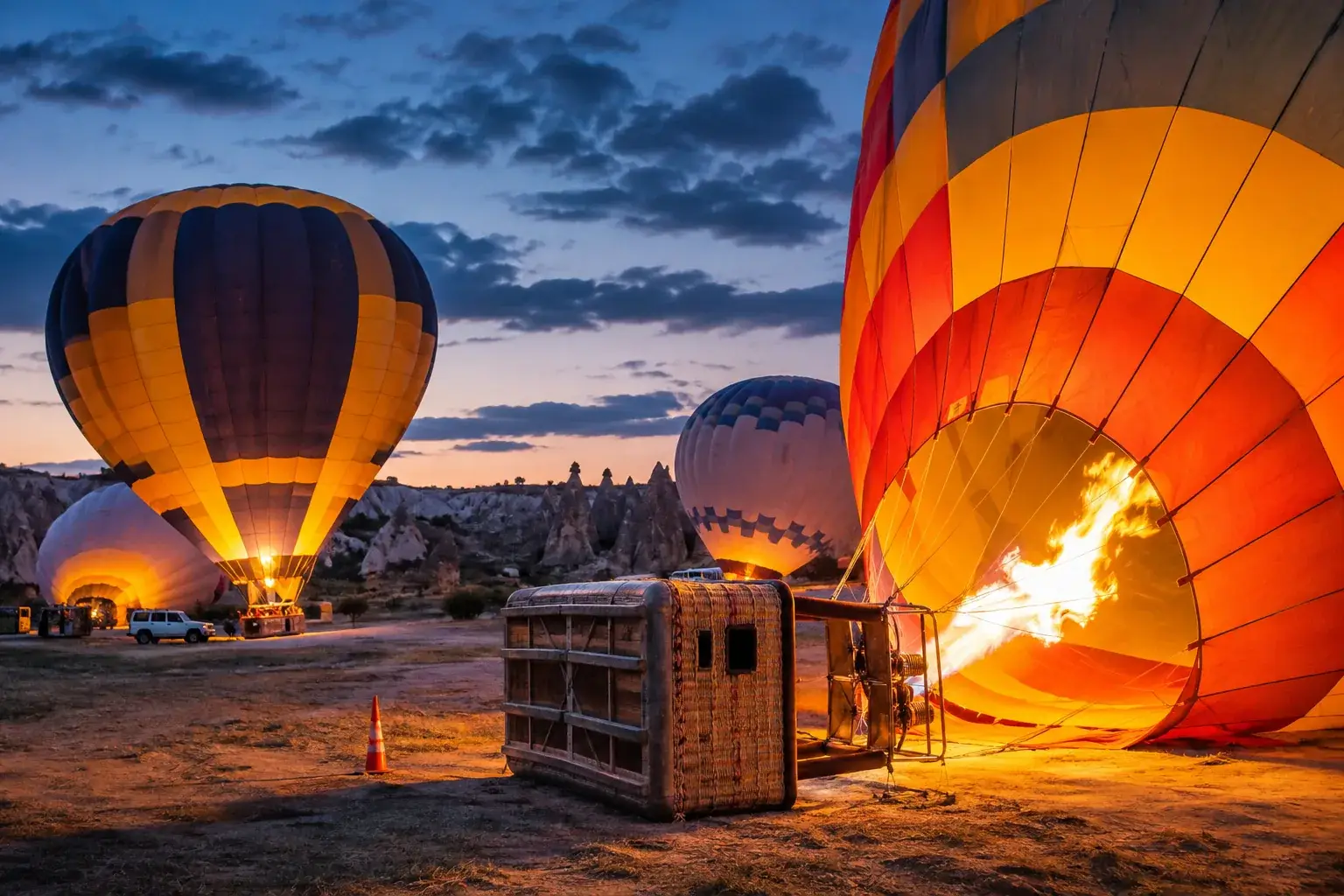
Every sunrise flight decision is made by the Turkish Civil Aviation Authority (SHGM), not by individual balloon operators. Flights get grounded when wind speeds exceed roughly 10-12 km/h, when fog reduces visibility below safe thresholds, or when rain or snow is active. No operator can override these calls, regardless of how many disappointed travelers are waiting at the launch site.
The seasonal breakdown tells a clear story. Summer (June through August) sees the fewest cancellations, with flights launching on over 90% of mornings thanks to dry, calm conditions. Spring and autumn sit in a reliable middle range: April through May and September through October typically see flights on 80-90% of mornings, according to Turkey Travel's seasonal analysis. Winter is where the odds shift dramatically. December through February brings frequent wind, fog, and snowfall that can ground flights on 40-60% of mornings. January 2026 was a clear example: flights were possible on only about 15 of 31 mornings that month. Compare that to October 2025, when balloon tours in Cappadocia flew on 27 out of 31 mornings.
The single most practical piece of advice for maximizing your chances: schedule your balloon flight for the first morning of your trip, not the last. If weather cancels that first attempt, you've got remaining mornings to rebook. Travelers who save the flight for their final day and then lose it to wind have no backup. Building two or three potential mornings into your itinerary turns a balloon ride from a gamble into a near-certainty, even in shoulder season.
(Most operators won't charge you again for a weather reschedule, but confirm this at booking since policies differ between Standard and Premium flight tiers.)
When Is the Most Affordable Time to Visit Cappadocia?
November through February (excluding Christmas and New Year's week) offers the lowest prices in Cappadocia, with cave hotel rates dropping 40-60% below spring and autumn peaks.

Those winter savings are real. A cave hotel room in Göreme that runs €150-200 per night in May might drop to €70-90 in January. Tour prices follow a similar curve, and you'll find fewer surcharges or minimum-group requirements during the quieter months. The trade-off is the weather covered earlier: shorter days, cold temperatures, and balloon cancellation rates that roughly double.
March and late October sit in a sweet spot for value-conscious travelers who don't want to freeze. Prices during these shoulder weeks tend to run 20-40% below peak rates while daytime temperatures stay above 14°C. March weather can be unpredictable (sunshine one day, a late snow flurry the next), but late October is remarkably stable with clear skies and comfortable hiking conditions.
The most expensive stretches are predictable: July and August command the highest accommodation rates because of sheer tourist volume. April and May weekends that coincide with Turkish public holidays (particularly the April 23 National Sovereignty holiday and May 19 Commemoration) also spike. Booking tours through a local operator based in Cappadocia rather than through international aggregator platforms often shaves 10-20% off the price, since you're cutting out the middleman's commission. If your dates are flexible and your priority is stretching your budget, targeting the first two weeks of November gives you autumn's lingering warmth, reasonable balloon odds, and winter-level pricing before the deep cold sets in.
Which Cappadocia Tour Should You Book for Each Season?
Spring pairs best with the Green Tour for lush Ihlara Valley scenery, summer suits underground cities, autumn favors the Red Tour, and winter rewards photographers willing to brave the cold.
Most travel guides list tours and seasons separately, as if they're unrelated decisions. They're not. The tour you pick should match the season you're visiting, because the same valley can feel like two entirely different places depending on the month.
Spring (April and May) is when the Green Tour truly shines. Ihlara Valley's river runs at full volume from snowmelt, wildflowers carpet the canyon floor, and the 3.5-kilometer gorge walk stays comfortably cool. Balloon flight success rates sit around 80-85% these months, so you can confidently schedule your sunrise flight for Day 1 and your Green Tour for Day 2.
Summer flips the script. With surface temperatures pushing past 32°C, the underground cities of Derinkuyu and Kaymaklı become the star attractions: their carved-rock chambers hover around 10-15°C year-round. If you're doing the Red Tour in June through August, request an early-morning start so you reach the Göreme Open-Air Museum before the midday heat bakes the exposed rock-cut churches.
Autumn (September and October) is the all-rounder. The Red Tour's fairy chimneys glow in warm, golden afternoon light that photographers chase all year, and clear skies keep balloon cancellations low. It's the season where every tour type, from balloon flights to valley hikes, delivers at its peak.
Winter transforms Cappadocia into something entirely different:
- Snow-dusted fairy chimneys in Devrent Valley create dramatic contrast against volcanic rock
- Open-air museums like Zelve are nearly empty, letting you linger without crowds
- ATV tours across white-blanketed terrain offer an adrenaline-fueled alternative when balloon flights get grounded
- Underground cities stay the same mild temperature, making them a reliable anchor for any winter itinerary
What About Photography and Golden Hour Timing?
October delivers the richest golden tones on fairy chimneys, January brings snow contrasts, and April adds wildflower color to Cappadocia's valleys; but the hour you shoot matters more than the month.

Cappadocia's landscape shifts dramatically between dawn and midday, and shooting at the wrong time of day will flatten even the most spectacular fairy chimney into a forgettable snapshot.
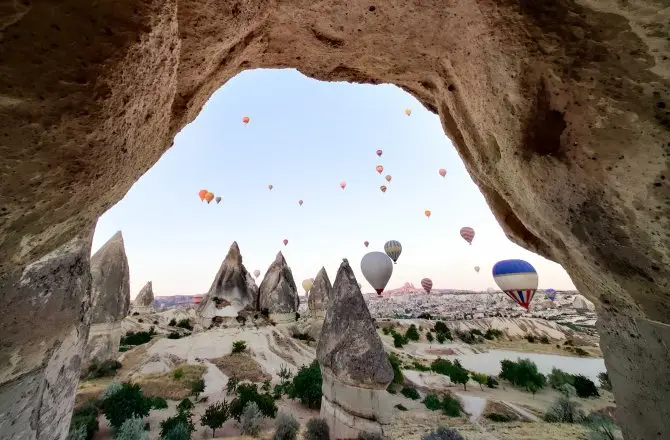
Golden hour at sunrise lines up perfectly with balloon launch times. In spring and autumn, that means being in position by 5:30 AM at spots like Göreme Sunset Point or Lover's Hill, where dozens of balloons rise against a pink-orange sky. Winter sunrise doesn't hit until roughly 7:30 AM, which is honestly a gift for anyone who dreads 4 AM alarms. You still get the same soft, directional light, just at a more human hour.
The least crowded viewpoints shift by time of day. Rose Valley at dawn during shoulder season (March or late October) often has fewer than a handful of photographers. Pigeon Valley works best in late afternoon year-round, when the sun drops behind Uçhisar Castle and side-lights the dovecotes carved into the cliff face.
One detail most guides skip: midday light in summer is harsh and nearly vertical, washing out the textures that make Cappadocia's rock formations so photogenic. Between 11 AM and 3 PM from June through August, you're better off ducking into a cave hotel lobby or exploring underground cities. Save your memory card for the evening, when Love Valley's pillars cast long shadows and the rock shifts from white to amber.
Frequently Asked Questions About Visiting Cappadocia
Is Cappadocia better in summer or winter?
Neither wins outright. Summer gives you long daylight hours and near-guaranteed balloon flights, but temperatures above 30°C make hiking miserable and prices peak. Winter delivers snow-covered valleys and significant savings, but balloon cancellation rates climb sharply. For most travelers, spring and autumn outperform both.
How many days do you need in Cappadocia?
Three days. Day 1 for a sunrise balloon flight and the Red Tour, Day 2 for the Green Tour through Ihlara Valley and the underground cities, and Day 3 as a buffer in case your balloon got cancelled or you want to explore independently. Two days is tight but doable; four to five days let you add ATV rides, pottery workshops in Avanos, and unhurried valley hikes.
Can you fly a hot air balloon in Cappadocia in winter?
Yes, flights operate year-round. The catch is that winter mornings get grounded far more often due to wind, fog, and snowfall. Plan at least three consecutive mornings in December through February to give yourself a realistic shot at flying.
What should I pack for Cappadocia?
Spring and autumn call for layers: a light jacket, a scarf for chilly mornings, and sturdy hiking shoes with grip for the uneven volcanic terrain in valleys like Rose and Red. Summer means sunscreen, a wide-brimmed hat, and a refillable water bottle. Winter demands a heavy coat, thermal base layers, waterproof boots, and gloves.
Is October too late to visit Cappadocia?
October is a local favorite. Daytime highs hover around 19°C, autumn foliage adds warm color to the valleys, and the summer crowds have thinned considerably.
Ready to Plan Your Cappadocia Trip?
Spring and autumn dates fill up fast, and the best balloon slots go weeks in advance. Browse Tatildokya's Cappadocia daily tours and reserve your spot with a local team that knows this landscape firsthand.