

Derinkuyu Underground City Tour: Pick the Right Cappadocia Route
Which Cappadocia tour should you book if you've only got two days and zero room for a wasted itinerary? The answer depends entirely on what moves you: fairy chimneys, ancient underground cities, or hidden canyon monasteries.
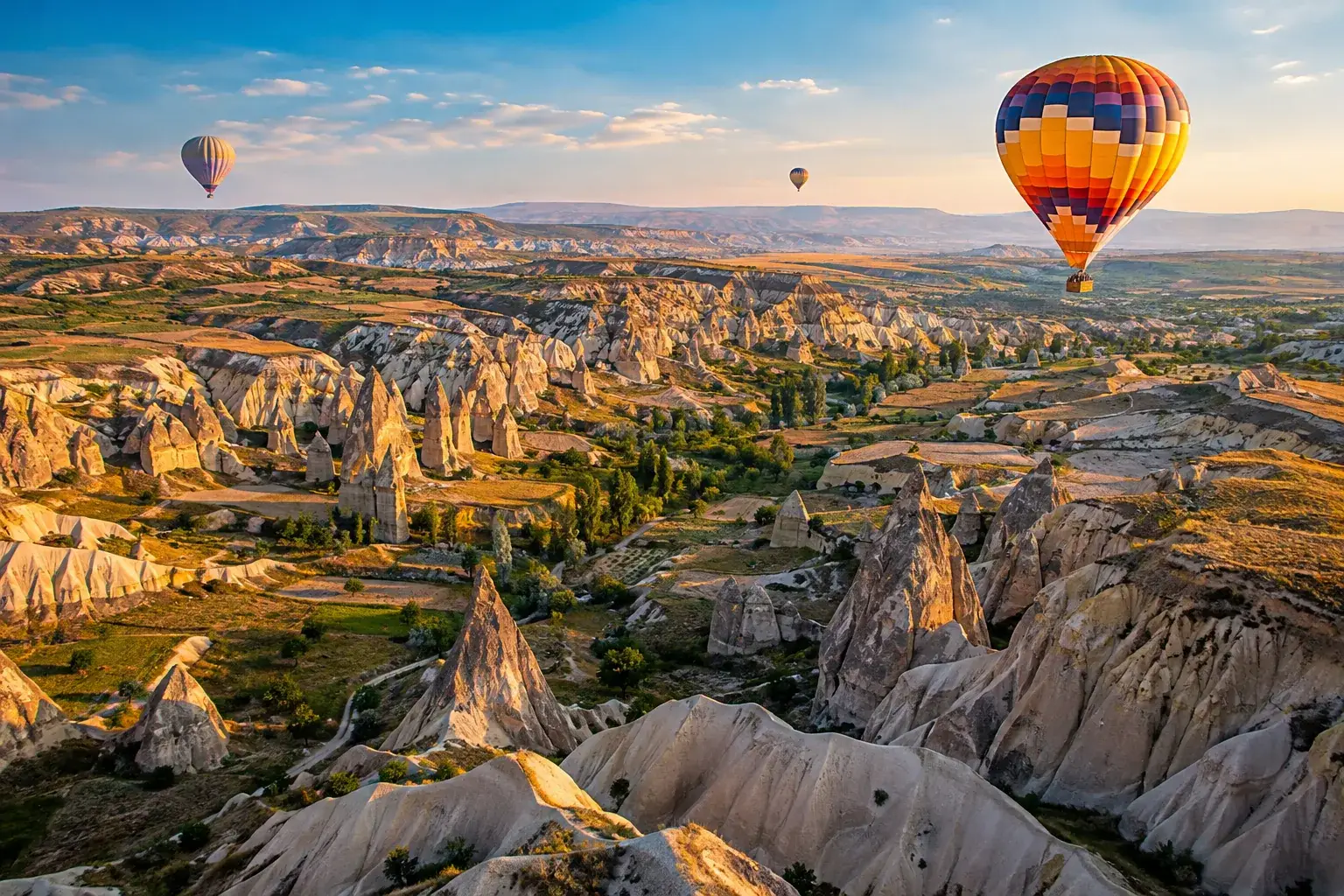
Most travelers land in Göreme with a tight schedule and face a confusing menu of color-coded routes. Red Tour, Green Tour, Blue Tour. The names tell you nothing about what's actually included, and the itineraries on booking platforms often blur together. Pick the wrong one and you'll spend eight hours photographing rock formations when you really wanted to descend 85 meters into a city carved beneath the earth two thousand years ago.
That underground city is Derinkuyu, and it consistently ranks as the single most talked-about experience among travelers who visit Cappadocia. According to Daily Sabah, nearly 1.5 million tourists visited Cappadocia's underground cities in 2023 alone. The demand is real, and it's growing. But Derinkuyu only appears on one standard daily tour route (the Green Tour), so booking the Red Tour by accident means missing it entirely.
This guide breaks down every major Cappadocia daily tour route so you can match your interests to the right itinerary. The Derinkuyu underground city tour gets the deepest coverage here because no other site in the region packs as much history, engineering, and sheer awe into a single stop.
Quick facts: Cappadocia contains over 200 underground cities and settlements. Derinkuyu is the deepest at approximately 85 meters (280 feet) across 18 floors, roughly 8 of which are open to visitors. The entire complex was rediscovered in 1963 when a local resident knocked down a wall during a home renovation and found a hidden room leading into the tunnels.
What Are the Main Cappadocia Daily Tour Routes from Göreme?
Cappadocia's three standard daily tours from Göreme are the Red Tour (north), Green Tour (south), and Blue Tour (west), each lasting 8 to 12 hours with distinct stops that suit different travel priorities.
The color-coding system dates back decades and every local agency uses it, but the names themselves don't hint at what you'll actually experience. Here's how the three routes compare side by side.
| Feature | Red Tour (North) | Green Tour (South) | Blue Tour (West) |
|---|---|---|---|
| Key Stops | Devrent Valley, Paşabağ, Avanos pottery workshops, Göreme Open-Air Museum | Derinkuyu Underground City, Ihlara Valley hike, Belisirma village, Selime Monastery, Pigeon Valley | Soğanlı Valley, Mustafapaşa village, rock-cut churches, Taşkınpaşa Mosque |
| Duration | 8-9 hours | 10-12 hours | 8-10 hours |
| Price Range (2026) | €45-€65 per person | €50-€75 per person | €45-€70 per person |
| Includes Derinkuyu? | No | Yes (primary attraction) | No |
| Best For | Photography lovers, fairy chimney enthusiasts, pottery fans | History buffs, nature hikers, underground city explorers | Off-the-beaten-path seekers, fewer crowds |
| Physical Difficulty | Easy (mostly viewpoints and short walks) | Moderate (4 km valley hike, underground descent) | Easy to moderate (walking through villages and churches) |
The Green Tour is the only standard route that includes the Derinkuyu underground city tour. That's by design: Derinkuyu sits about 40 km south of Göreme, and the southern itinerary strings together the underground city, Ihlara Valley's canyon hike, and Selime Monastery into a single packed day.
If none of these preset routes match your interests perfectly, a private Mix Tour lets you cherry-pick stops from multiple routes into one custom day. Some travelers combine Derinkuyu with Paşabağ's fairy chimneys, for example, skipping Ihlara Valley to save energy.
Logistics are straightforward for all three routes. Most daily tours from Göreme include hotel pickup between 9:00 and 9:30 AM and drop-off around 5:30 to 6:30 PM. Group sizes typically range from 12 to 20 travelers in a minibus, with a licensed English-speaking guide. Entrance fees, lunch, and transport are almost always bundled into the quoted price.
What Does a Full-Day Green Tour Itinerary Look Like?
The Green Tour runs approximately 10 to 12 hours, starting with Derinkuyu Underground City and finishing at Pigeon Valley, with a canyon hike and riverside lunch between.

Your day begins earlier than the other Cappadocia tour routes. Hotel pickup in Göreme happens around 7:00 to 7:30 AM because the drive south to Derinkuyu takes 40 to 50 minutes, and arriving before the midday crowds makes the underground experience dramatically better. By 8:30 AM, you're descending into the tunnels while most tour groups are still eating breakfast.
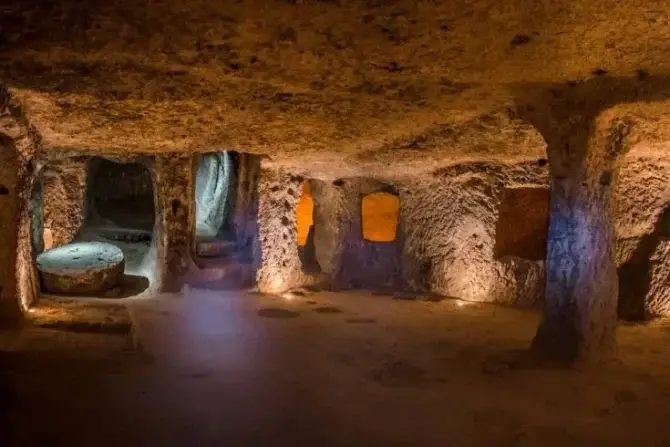
The Derinkuyu stop typically lasts about 90 minutes. Your guide walks you through eight accessible floors, pointing out details you'd miss on your own: the blackened kitchen ceilings from centuries of cooking fires, the cruciform church carved into solid rock on level three, the massive rolling stone doors that sealed off entire sections during sieges. After resurfacing, the bus heads west toward Ihlara Valley.
Ihlara Valley is where the day shifts gears completely. You descend 300-plus stone steps into a lush river canyon and hike roughly 4 kilometers along the Melendiz River, passing Byzantine rock-cut churches tucked into cliff faces. The contrast is striking: you go from a claustrophobic underground labyrinth to an open green gorge within the same morning.
Lunch happens in Belisirma, a tiny village where riverside restaurants serve Turkish buffet-style meals. Grilled trout is a local favorite here. After eating, the bus continues to Selime Monastery, a massive rock-carved complex perched on a cliff that some travelers compare to a real-life set from a fantasy film. The final stop is Pigeon Valley, where you get panoramic views of Uçhisar Castle and the surrounding fairy chimneys. Most groups return to Göreme between 5:30 and 6:30 PM.
A standard group Green Tour includes round-trip transport, a licensed English-speaking guide, entrance fees for Derinkuyu and Ihlara Valley, lunch, and hotel pickup and drop-off. Personal drinks, souvenirs, and optional extras like pottery demonstrations are not included.
Pricing for group Green Tours in 2026 falls between €50 and €75 per person. Private tours, which give you control over pacing and stops, start around €150 to €250 for the vehicle (not per person). Traveling as a couple or small group can bring the per-person cost of a private tour close to the group rate, with far more flexibility. Tatildokya's Deluxe Green Tour keeps groups small to avoid the bottleneck effect inside Derinkuyu's narrower passages.
One pattern that shows up repeatedly in traveler reviews on Viator: people who booked large 20-person group tours describe feeling rushed inside Derinkuyu, averaging only 30 to 45 minutes underground instead of the full 90. Smaller groups consistently report more time on each floor and better access to the guide's explanations. That time difference changes whether you walk away thinking "cool tunnels" or "one of the most incredible places I've ever been."
Who Built Derinkuyu and Why? The History Behind the World's Deepest Underground City
Phrygians began carving Derinkuyu in the 8th to 7th century BCE, and early Christians expanded it into an 18-floor refuge capable of sheltering 20,000 people during sieges that lasted months.
The question of who built Derinkuyu doesn't have a single clean answer, and that's part of what makes the site so fascinating. Archaeological evidence points to the Phrygians, an Anatolian civilization that dominated central Turkey around 800 BCE, as the original builders. They likely carved the first few levels for grain storage and basic shelter during regional conflicts. But the Derinkuyu you walk through today is overwhelmingly a Byzantine-era creation.
Early Christians fleeing Roman persecution and, later, Arab raids during the 5th through 10th centuries transformed those modest Phrygian storage rooms into a fully self-sustaining underground city. They dug deeper, connecting level after level until the complex reached approximately 85 meters below the surface. According to BBC Travel, the finished city could house roughly 20,000 people along with their livestock, food stores, wine presses, and oil presses for months at a time.
The engineering is what stops most visitors mid-step. Ventilation shafts reaching 55 meters deep supplied fresh air to every floor, solving the problem that would have made prolonged underground habitation impossible. Each floor had independent water wells, so an invading force couldn't poison the supply from a single point. The rolling stone doors (some weighing over 500 kilograms) could be rolled shut from the inside but not pushed open from the outside. These weren't decorative. They were siege technology.
"Derinkuyu isn't simply a hiding place. It's a complete city, with schools, churches, wine cellars, and ventilation systems that rival modern engineering in their ingenuity." Adapted from historical accounts documented by researchers at History Hit
The rediscovery story is almost too strange to believe. In 1963, a Derinkuyu resident was renovating his home when he knocked through a wall and found a hidden room. That room led to a passage, which led to another room, and another, until the full scale of the underground city became apparent. For centuries, locals had known about some of the upper tunnels (farmers used them for cold storage), but nobody had grasped the true depth.
Depth is only part of the story. Derinkuyu was connected to nearby Kaymakli through an estimated 8 to 9 kilometers of tunnels, creating a network that allowed entire communities to move between cities underground during prolonged sieges.
Understanding this context transforms the Derinkuyu underground city tour from a walk through dim corridors into something genuinely moving. When your guide points to the grooves worn into stone doorways by thousands of hands over centuries, or when you stand in the cruciform church on level three and realize people worshipped here in secret to survive, the scale of human resilience hits differently than any museum exhibit can deliver.
What Will You See Inside Derinkuyu? A Floor-by-Floor Visitor Guide
Visitors explore eight open floors inside Derinkuyu, descending from ground-level stables through living quarters, a cruciform church, wine presses, and deep ventilation shafts that kept 20,000 people alive underground.

No other guide online breaks down what you'll encounter on each level, so here's the floor-by-floor walkthrough that'll help you know exactly what you're looking at as you descend.
| Level | What You'll Find | Passage Width | Don't Miss |
|---|---|---|---|
| 1 | Stables, grain storage, grinding mills | Spacious, easy walking | Carved stone feeding troughs still visible along walls |
| 2 | Living quarters, kitchens | Comfortable, moderate width | Blackened ceilings from cooking fires, a detail spanning centuries |
| 3 | Cruciform church, missionary school | Some ducking required | Byzantine religious carvings; the church is the most photographed room |
| 4 | Additional residential chambers, storage | Moderate | Transition zone where passages start narrowing |
| 5-6 | Communal halls, wine and oil presses | Narrower (some spots 70-80 cm) | Stone press basins where grapes and olives were processed underground |
| 7-8 | Ventilation shaft viewpoint, water well, deepest accessible area | Tight (60-70 cm in places) | Looking straight up a 55-meter ventilation shaft is the single most dramatic moment of the tour |
The first two floors feel almost comfortable. Ceilings are high enough to stand upright, and the rooms open into each other with enough space that you won't feel crowded even during busy hours. This is where you'll see the stables (complete with carved troughs where animals fed) and the kitchens, identifiable by soot-darkened rock overhead.
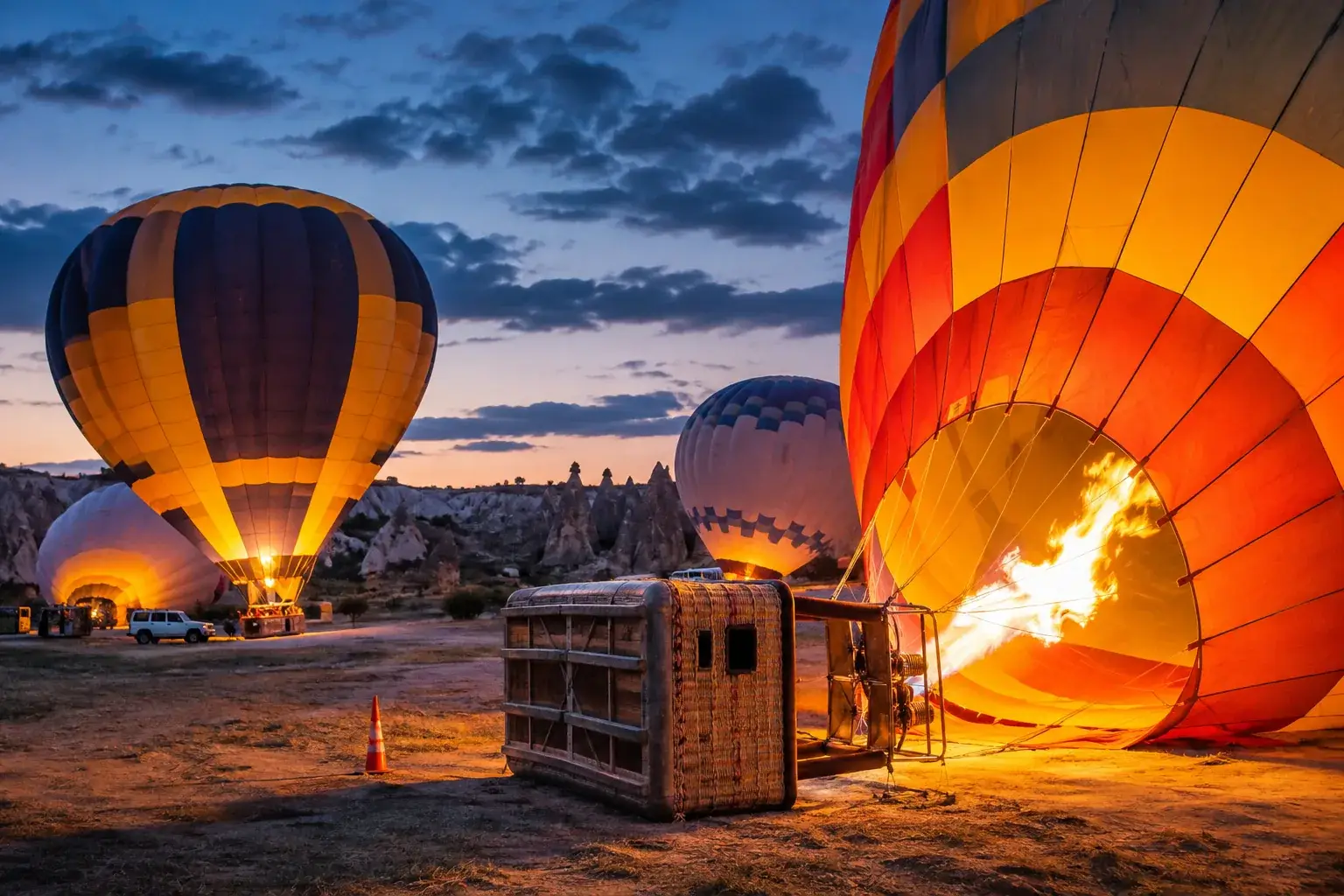
Level three is where most visitors pause longest. The cruciform church, shaped in a cross pattern carved directly from the volcanic tuff, served as the spiritual center of the entire underground community. Adjacent to it sits what researchers believe was a missionary school and a confessional room. If you're pairing your Cappadocia trip with a sunrise balloon flight, the contrast between floating above fairy chimneys at dawn and standing inside a hidden church carved underground is the kind of experience that makes this region unforgettable.
By levels five and six, the passages tighten. You'll spot the communal wine and oil presses here, stone basins where residents processed food for long-term underground survival. The air feels cooler. Sound dampens. Conversations from other groups fade.
Levels seven and eight are the reward for anyone willing to duck through the narrowest corridors. Standing at the base of the 55-meter ventilation shaft and looking straight up toward a pinpoint of light is genuinely breathtaking. The water well on level eight operated independently from the floors above, a defensive measure ensuring no single contamination event could cut off the entire city's supply.
Temperatures inside Derinkuyu hold steady around 13-15°C (55-59°F) year-round, so bring a light layer even in summer. The deeper you go, the more you'll appreciate it.
With a guide, expect to spend about 90 minutes inside. Independent visitors sometimes finish in 30 to 45 minutes because they miss the significance of what they're passing. The rooms all look like carved stone without context; with a knowledgeable guide narrating the purpose of each space, the city comes alive. Wearing shoes with good grip matters more than you'd think. The stone floors get slick from humidity on the lower levels.
Derinkuyu vs. Kaymakli: Which Underground City Should You Visit?
Derinkuyu descends 85 meters across eight open floors while Kaymakli reaches roughly 40 meters with four open floors, making Derinkuyu the more immersive choice for most travelers.
This is the question that fills Cappadocia travel forums, and surprisingly, no major tour content provider publishes a direct comparison. So here it's.
| Feature | Derinkuyu | Kaymakli |
|---|---|---|
| Depth | 85 meters (280 feet) | ~40 meters (130 feet) |
| Total Floors | 18 | 8 |
| Floors Open to Visitors | ~8 | ~4 |
| Narrowest Tunnel Width | 60-70 cm in spots | Generally wider throughout |
| Distance from Göreme | ~40 km (40-50 min drive) | ~30 km (30-40 min drive) |
| Entrance Fee (2026) | ~₺150-200 standalone | ~₺150-200 standalone |
| Visit Duration | 90 minutes (guided) | 45-60 minutes (guided) |
| Crowd Level | Moderate | High (most visited site) |
| Best For | Adventurous travelers, history enthusiasts | Families, travelers with claustrophobia concerns, shorter visits |
Conventional wisdom says Kaymakli is "better for beginners," but that framing steers people toward a less memorable experience. Derinkuyu's deeper floors are what create the emotional impact travelers remember years later. Kaymakli's wider passages feel more comfortable, sure. But comfort isn't why you're descending into a 2,000-year-old underground city. You're there for the sense of scale, the engineering that makes your jaw drop, the moment you realize an entire civilization lived and worshipped and pressed wine 85 meters below the surface.
Kaymakli does have real advantages for specific situations. Families with children under six will find the wider tunnels and shorter visit duration much more manageable. Travelers with mobility concerns or strong claustrophobia will feel more at ease. Kaymakli hosted approximately 560,000 visitors annually as of 2023, making it the single most-visited underground city in the region, partly because some tour operators default to it for logistical convenience.
Derinkuyu's lower visitor count per day actually works in your favor. Fewer bottlenecks on the deeper floors mean you can linger at the ventilation shaft viewpoint or study the rolling stone doors without a queue forming behind you.
If you only have time for one underground city, choose Derinkuyu. It's the site included on most Green Tour itineraries for a reason: double the accessible floors, double the depth, and a sensory experience that Kaymakli simply can't replicate in its four levels. Travelers who want both can book a private Mix Tour with a custom itinerary that combines Derinkuyu and Kaymakli in a single day, since the two cities sit only about 10 minutes apart by car.
How Do You Get to Derinkuyu Independently vs. on a Tour?
Most travelers reach Derinkuyu via an organized Green Tour from Göreme (€50-€75 per person), though self-driving the 40 km route takes about 40 minutes and costs roughly €30-50 for a rental car plus the entrance fee.

The Green Tour is the default for good reason. You get hotel pickup, a licensed English-speaking guide, lunch, entrance fees, and four to five stops across 150+ km of southern Cappadocia, all handled for you. For solo travelers or couples, the per-person math is hard to beat. Group sizes typically run 8 to 15 people, which keeps the experience personal without the chaos of a 40-seat bus.
Private tours cost €250-€400 for up to four people and let you set the pace. Want to spend an extra 20 minutes in the cruciform church on level three? Done. Want to skip a stop and add a pottery workshop in Avanos instead? Your guide adjusts on the fly. Traveling as a group of three or four brings the per-person rate close to what you'd pay for a group tour, with dramatically more flexibility.
Renting a car is the independence play. The drive from Göreme south on the D805 highway is straightforward, parking sits right at the entrance, and you can combine the visit with other stops on your own schedule. Skipping the guide saves money, fair enough, but the underground city is a labyrinth of unmarked rooms. Without narration, you'll walk past a 1,400-year-old wine press without realizing what you're looking at.
- Green Tour (group): €50-€75 per person, all-inclusive, hotel pickup at ~8:00 AM, returns by ~6:00 PM
- Private tour: €250-€400 total for 1-4 people, fully customizable itinerary
- Rental car: ~€30-50/day plus the standalone entrance fee of approximately 650-800 TL in 2026
- Public minibus: Most affordable option (under €5), but runs infrequently from Nevşehir bus station with no direct Göreme connection
Derinkuyu's 2026 opening hours run 8:00 AM to 7:00 PM in summer and 8:00 AM to 5:00 PM in winter. Arriving at opening or after 3:00 PM avoids the midday tour bus crush that peaks between 10:30 AM and 1:00 PM.
Unless you're an experienced road-tripper who's already read up on the site's history, the guided tour delivers significantly more value per hour spent underground.
Can You Handle the Tunnels? Claustrophobia, Accessibility, and What to Wear
Passages on deeper floors narrow to 60-70 cm wide with low ceilings requiring ducking, though upper floors (1-3) remain spacious enough for most visitors, including those with mild claustrophobia.
Some sections of the underground city will test your comfort with enclosed spaces. The first three floors feel like walking through wide stone hallways. Ceilings are high, there's room to pass other visitors, and the lighting is steady. Most people with mild claustrophobia handle these levels without a second thought.
Floors four through six begin to narrow. You'll notice the walls closing in, ceilings dropping to the point where taller visitors (anyone over about 175 cm) start ducking. The deepest open floors, seven and eight, are where the real squeeze happens. Passages shrink to 60-70 cm across, roughly the width of a standard doorframe turned sideways. No crawling required, but you'll hunch, twist slightly, and feel the cool stone brush your shoulders.
The claustrophobia concern can overshadow a more practical issue for many travelers: the stairs. Steep, uneven stone steps connect every level, with no handrails in several stretches. The site isn't wheelchair accessible, and visitors with knee problems or limited mobility will find anything below floor three genuinely difficult. Children under five can struggle with the stair heights. If mobility is a concern, the upper three floors still give you grinding mills, stables, living quarters, and enough atmosphere to feel the weight of centuries overhead.
What you wear matters more here than at almost any other Cappadocia site. The underground temperature holds steady around 15°C year-round, so even in August, you'll want a light jacket. Sturdy closed-toe shoes with grip are non-negotiable because the stone floors get slippery from condensation. Leave the hiking backpack at the hotel; a small crossbody bag keeps your hands free and won't catch on narrow walls. A headlamp or phone flashlight on a low setting gives you far better photos than the harsh built-in flash, which just bounces off the stone and washes everything out.
For timing, early morning entry or late afternoon visits after 3:00 PM mean fewer bodies in those tight lower corridors. Shoulder season months, April through May and September through October, thin the crowds even further. According to History Hit, the site's popularity has surged in recent years, making off-peak timing a genuine advantage rather than a nice-to-have.
How Much Do Cappadocia Daily Tours Cost in 2026?
Group Green Tours cost €50-€75 per person in 2026, covering transport, guide, lunch, and entrance fees across 150+ km of southern Cappadocia, with no hidden charges at individual stops.

Breaking down the actual numbers helps you see where your money goes and, just as importantly, where budget tours cut corners.
| Tour Type | Price Range (2026) | Group Size | Includes Entrance Fees? | Includes Lunch? | Includes Hotel Pickup? |
|---|---|---|---|---|---|
| Group Green Tour | €50-€75/person | 8-15 | Yes | Yes | Yes |
| Group Red Tour | €45-€65/person | 8-15 | Yes | Yes | Yes |
| Private Green Tour | €250-€400 total | 1-4 | Yes | Yes | Yes |
| Private Mix Tour | €300-€500 total | 1-4 | Yes | Yes | Yes |
| Self-Guided (Derinkuyu only) | €30-50 car rental + 650-800 TL entrance | 1 | No (pay at gate) | No | No |
The Group Green Tour is where the value math really shines. You're covering over 150 km of driving through southern Cappadocia, getting a licensed guide who speaks English, eating a sit-down lunch, and entering multiple paid sites, all for roughly what you'd spend on a decent dinner in Göreme. For solo travelers and couples, the per-person economics simply can't be matched by any other format.
Book the cheapest Green Tour you can find and you'll almost certainly pay for it elsewhere. Tours priced below €40 per person almost always recoup that discount somewhere: entrance fees charged separately at each stop, groups ballooning to 40+ people crammed into a full-size coach, or schedules so rushed you get 20 minutes inside an underground city that deserves 90. The €10-€15 difference between a budget operator and a quality small-group tour translates into a fundamentally different experience.
Private tours make financial sense starting at three people. A €300 private Green Tour split three ways comes to €100 per person, which buys you a fully customizable day with your own guide and vehicle. For families with young children or travelers with specific accessibility needs, that flexibility is worth every extra euro.
Tatildokya runs small-group tours with licensed local guides and all-inclusive pricing, so the number you see at booking is the number you pay. No envelope of cash needed at each entrance gate. You can explore Cappadocia tours to compare group and private options side by side.
Peak season runs April through October, and prices during this window sit 10-20% higher than winter rates. Booking a few days in advance during July and August isn't just smart; it's often necessary to secure a spot at all.
Frequently Asked Questions About Derinkuyu and Cappadocia Daily Tours
Is Derinkuyu underground city safe for claustrophobic visitors?
The upper floors (1-3) have high ceilings and wide corridors that most mildly claustrophobic visitors handle comfortably. Deeper floors narrow to 60-70 cm in spots with low overhangs. You can turn around at any level, and guides are accustomed to helping anxious visitors navigate at their own pace.
How long does a Derinkuyu underground city tour take?
Guided visits inside run 60-90 minutes for most travelers. Independent visits tend to stretch closer to 45-60 minutes since you'll spend time reading plaques and orienting yourself. The full Green Tour day trip, which includes multiple stops beyond the underground city, runs approximately 10-12 hours door to door.
Can you visit Derinkuyu without a tour from Göreme?
Yes, by rental car (40 minutes via the D805) or public minibus routed through Nevşehir. There's no direct public transport link from Göreme to the site, so independent visitors need to transfer at Nevşehir bus station. Without a guide, you'll miss the historical context that turns unlabeled stone rooms into kitchens, churches, and wine cellars.
What is the difference between the Green Tour and Red Tour in Cappadocia?
The Green Tour heads south toward the underground cities, a canyon hike, and ancient rock-cut monasteries. The Red Tour goes north through Göreme Open Air Museum, fairy chimney formations, and the pottery town of Avanos. Green Tour for history and nature; Red Tour for landscapes and culture.
Should I visit Derinkuyu or Kaymakli underground city?
Adventurous travelers who want the full subterranean experience should pick Derinkuyu. Families with young children or visitors uncomfortable in tight spaces will find the wider, shallower layout more manageable at Kaymakli. Most Green Tour itineraries include the deeper city by default.
What should I wear to visit Derinkuyu underground city?
Sturdy closed-toe shoes with good grip, a light jacket (15°C underground even in summer), and a small crossbody bag instead of a backpack. Skip loose scarves or dangling jewelry that can snag on rough stone walls in narrow passages.
Book Your Cappadocia Tour and See Derinkuyu for Yourself
The logistics of a full day across underground cities, canyon hikes, and ancient monasteries are genuinely complex. Tatildokya offers small-group and private Cappadocia daily tours with licensed local guides, hotel pickup, and all-inclusive pricing. Explore all Cappadocia tour options and lock in your spot before peak season fills up.